Gemstones
Gemstones, any of various minerals highly prized for beauty, durability, and rarity. A few noncrystalline materials of organic origin (e.g., pearl, red coral, and amber) also are classified as gemstones.
Gemstones have attracted humankind since ancient times, and have long been used for jewelry. The prime requisite for a gem is that it must be beautiful. The beauty may lie in colour or lack of colour; in the latter case, extreme limpidity and “fire” may provide the attraction. Iridescence, opalescence, asterism (the exhibition of a star-shaped figure in reflected light), chatoyance (the exhibition of a changeable lustre and a narrow, undulating band of white light), pattern, and lustre are other features that may make a gemstone beautiful. A gem must also be durable, if the stone is to retain the polish applied to it and withstand the wear and tear of constant handling.
In addition to their use as jewelry, gems were regarded by many civilizations as miraculous and endowed with mysterious powers. Different stones were endowed with different and sometimes overlapping attributes; the diamond, for instance, was thought to give its wearer strength in battle and to protect him against ghosts and magic. Vestiges of such beliefs persist in the modern practice of wearing a birthstone.
A brown-colored dog wearing a red-checked shirt with an orange hard helmet and hammer. Labor Day concept, work, jobs.
Britannica Quiz
Odd Jobs Vocabulary Quiz
Of the more than 2,000 identified natural minerals, fewer than 100 are used as gemstones and only 16 have achieved importance. These are beryl, chrysoberyl, corundum, diamond, feldspar, garnet, jade, lazurite, olivine, opal, quartz, spinel, topaz, tourmaline, turquoise, and zircon. Some of these minerals provide more than one type of gem; beryl, for example, provides emeralds and aquamarines, while corundum provides rubies and sapphires. In virtually all cases, the minerals have to be cut and polished for use in jewelry.
Except for diamond, which presents special problems because of its very great hardness (see diamond cutting), gemstones are cut and polished in any of three ways. Agate, opal, jasper, onyx, chalcedony (all with a Mohs hardness of 7 or less) may be tumbled; that is, they may be placed in a cylinder with abrasive grit and water and the cylinder rotated about its long axis. The stones become polished but are irregular in shape. Second, the same kinds of gemstones may instead be cut en cabochon (i.e., with a rounded upper surface and a flat underside) and polished on water- or motor-driven sandstone wheels. Third, gemstones with Mohs hardness of more than 7 may be cut with a carborundum saw and then mounted in a holder (dop) and pressed against a lathe that can be made to revolve with extreme rapidity. The lathe carries a point or small disk of soft iron, which can vary in diameter from that of a pinhead to a quarter of an inch. The face of the disk is charged with carborundum grit, diamond dust, or other abrasives, along with oil. Another tool used to grind facets is the dental engine, which has greater flexibility and sensitiveness than the lathe. The facets are ground onto the stone using these tools and then are polished as described above.
Of decisive significance for the modern treatment of gemstones was the kind of cutting known as faceting, which produces brilliance by the refraction and reflection of light. Until the late Middle Ages, gems of all kinds were simply cut either en cabochon or, especially for purposes of incrustation, into flat platelets.
The first attempts at cutting and faceting were aimed at improving the appearance of stones by covering natural flaws. Proper cutting depends on a detailed knowledge of the crystal structure of a stone, however. Moreover, it was only in the 15th century that the abrasive property of diamond was discovered and used (nothing else will cut diamond). After this discovery, the art of cutting and polishing diamonds and other gems was developed, probably in France and the Netherlands first. The rose cut was developed in the 17th century, and the brilliant cut, now the general favourite for diamonds, is said to have been used for the first time about 1700.
Showing 1–16 of 869 resultsSorted by latest
-
Sale!
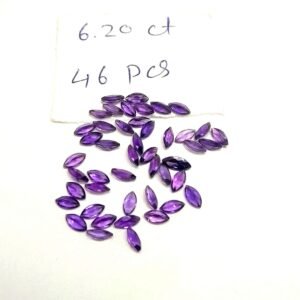
Purple Synthetic CZ Stones 6.20 Cts 46 Pcs Marquise Cut 5×2.5 mm CZ-107
Original price was: ₹2,500.₹1,500Current price is: ₹1,500. -
Sale!
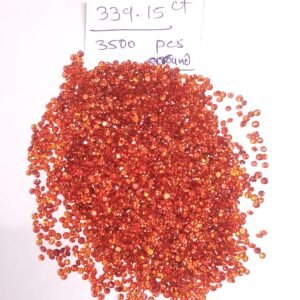
Top Lustrous Orange Cubic Zirconia Round Gemstones 339.15 Cts 3500 Pcs 2-2.5mm CZ-102
Original price was: ₹75,000.₹37,900Current price is: ₹37,900. -
Sale!
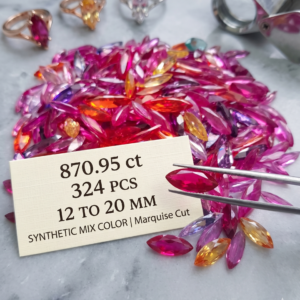
Multi Color Marquise Synthetic Gemstones Wholesale Lot 870.95 Cts 324 Pcs,12-20mm CZ-126
Original price was: ₹150,000.₹87,500Current price is: ₹87,500. -
Sale!
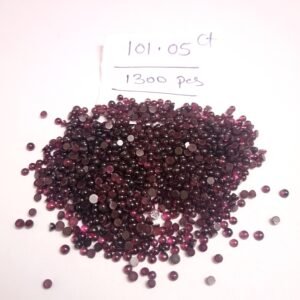
Natural Pink Rhodolite Garnet Round Cabochons 1300 Pcs 101.05 Cts (2-3mm) for Jewellery GT-4
Original price was: ₹75,000.₹34,900Current price is: ₹34,900. -
Sale!
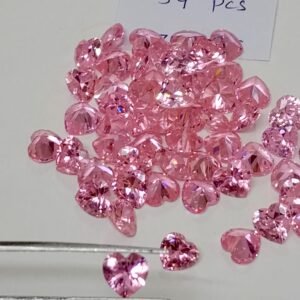
Pink Heart Cut Synthetic CZ Gemstones 163.50 Cts 54 Pcs CZ-125
Original price was: ₹50,000.₹24,900Current price is: ₹24,900. -
Sale!
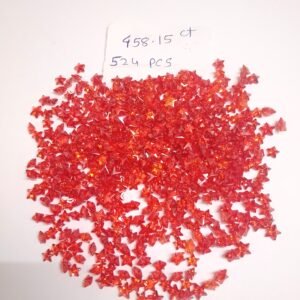
Orange CZ Synthetic Cubic Zirconia Gemstones Star Shape 458.15 Cts 524 Pcs 6mm CZ-120
Original price was: ₹95,000.₹39,900Current price is: ₹39,900. -
Sale!
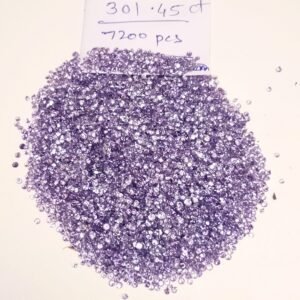
Purple Synthetic CZ Loose Stones Round Cut 301.45 Cts 7200 Pcs 1.5mm CZ-118
Original price was: ₹85,000.₹34,900Current price is: ₹34,900. -
Sale!
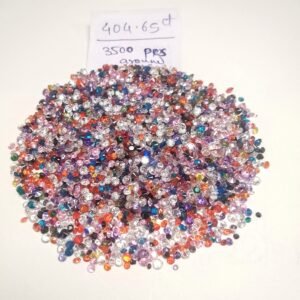
Multi-Color Cubic Zirconia Round Cut Gemstones 404.65 Cts 3500 Pieces 2-4mm CZ-106
Original price was: ₹78,000.₹39,900Current price is: ₹39,900. -
Sale!
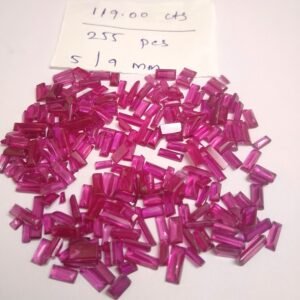
Red Octagon Cut Synthetic CZ Stones Lot 119 Ct 255 Pcs, 5-9 mm CZ-103
Original price was: ₹18,500.₹9,900Current price is: ₹9,900. -
Sale!
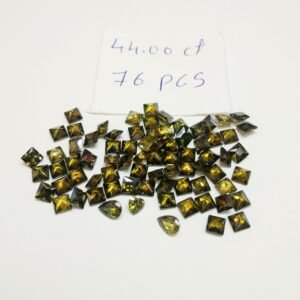
Green Princess Cut Cubic Zirconia Gemstones 44 Cts 76 Pcs, 4 mm CZ-111
Original price was: ₹9,500.₹4,150Current price is: ₹4,150. -
Sale!
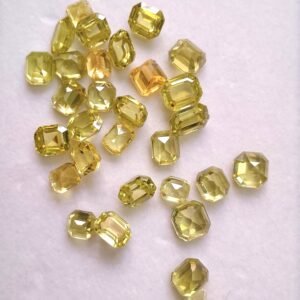
Yellow Topaz Gemstones Lot 31 Pcs 161.05 Cts Emerald Cut 7-10 MM YT-1
Original price was: ₹35,000.₹17,500Current price is: ₹17,500. -
Sale!
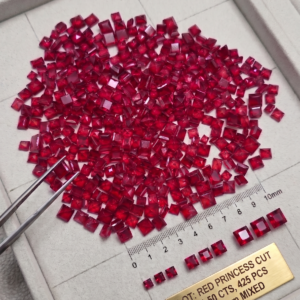
Red Princess Cut Cubic Zirconia Gemstones 141.50 Cts 425 Pcs Mixed Sizes (3-5mm) CZ-112
Original price was: ₹28,500.₹14,950Current price is: ₹14,950. -
Sale!
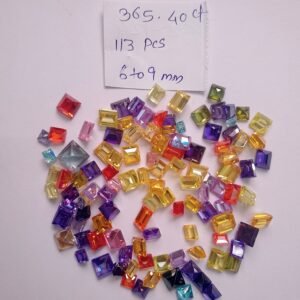
Multi-Color Synthetic CZ Stones Princess Cut 365.40 Cts 6-9 mm, 113 Pcs CZ-124
Original price was: ₹55,000.₹29,900Current price is: ₹29,900. -
Sale!
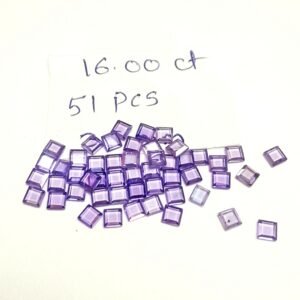
Purple Synthetic CZ Stones Princess Cut 16.00 Cts 51 Pcs 3.5 MM CZ-108
Original price was: ₹4,000.₹1,900Current price is: ₹1,900. -
Sale!
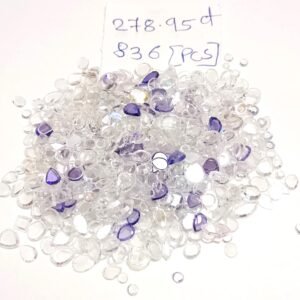
White Purple Synthetic CZ Stones Polki 278.95 Cts 836 Pcs Uncut 3-8 MM CZ-116
Original price was: ₹28,500.₹16,900Current price is: ₹16,900. -
Sale!
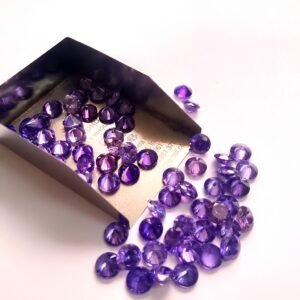
Purple Cubic Zirconia Round Cut Gemstones 142.55 Cts 63 Pcs, 7mm CZ-121
Original price was: ₹25,000.₹14,900Current price is: ₹14,900.